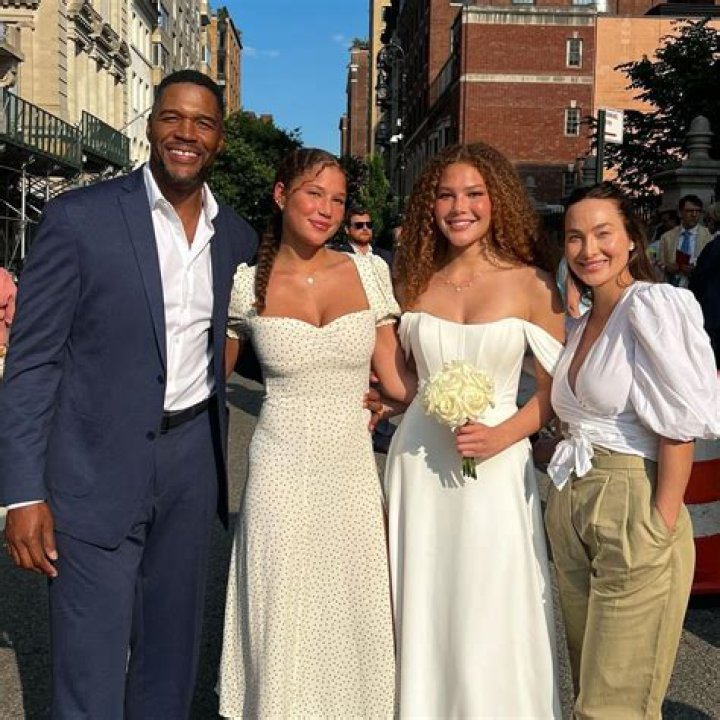
Pat Sajak, the longtime host of the game show Wheel of Fortune, has three grandchildren of mixed-race heritage through his daughter, Maggie Sajak. While their racial background has not been widely publicized, it has been acknowledged in interviews and social media posts by family members.
The existence of Pat Sajak's black grandchildren is significant for several reasons. Firstly, it challenges the often-held assumption that interracial relationships and families are uncommon or undesirable. Secondly, it highlights the diversity within families and the growing acceptance of multiracial identities.
The topic of Pat Sajak's black grandchildren has been discussed in various media outlets, including articles and social media posts. It has sparked conversations about race, representation, and the changing demographics of American society. Overall, the presence of Pat Sajak's black grandchildren serves as a reminder that families come in all shapes, sizes, and colors, and that diversity should be celebrated and embraced.
Pat Sajak's Black Grandchildren
The existence of Pat Sajak's black grandchildren has brought to light several key aspects related to race, family, and representation:
- Interracial relationships: Pat Sajak's daughter's marriage to a black man challenges the assumption that interracial relationships are uncommon.
- Racial diversity: The presence of black grandchildren in Pat Sajak's family highlights the growing diversity within American families.
- Representation: The visibility of Pat Sajak's black grandchildren in the media helps to normalize multiracial families and identities.
- Family values: Pat Sajak's love and acceptance of his black grandchildren demonstrates the importance of family values over racial differences.
- Racial identity: The experiences of Pat Sajak's black grandchildren may differ from those of their white cousins, shaping their racial identity.
- Media attention: The media's coverage of Pat Sajak's black grandchildren has sparked conversations about race and representation.
- Social change: The existence of Pat Sajak's black grandchildren reflects the changing demographics of American society and the increasing acceptance of multiracial families.
Overall, the presence of Pat Sajak's black grandchildren serves as a reminder that families come in all shapes, sizes, and colors, and that diversity should be celebrated and embraced.
Interracial relationships
The marriage of Pat Sajak's daughter, Maggie, to a black man is a notable example of an interracial relationship. This challenges the assumption that such relationships are uncommon, as they are becoming increasingly prevalent in society.
Interracial relationships have historically faced social and cultural barriers, but they are becoming more accepted and common. The visibility of Pat Sajak's daughter's interracial marriage helps to normalize such relationships and sends a positive message about diversity and inclusion.
The existence of Pat Sajak's black grandchildren is a direct result of his daughter's interracial marriage. Their presence in the public eye helps to challenge stereotypes and promote understanding of multiracial families.
Overall, the interracial relationship between Pat Sajak's daughter and her husband is a significant factor in the existence of his black grandchildren. It challenges the assumption that interracial relationships are uncommon and highlights the growing diversity of American families.
Racial diversity
The presence of black grandchildren in Pat Sajak's family is a reflection of the growing diversity within American families. This diversity is due to a number of factors, including:
- Increased interracial marriage: The number of interracial marriages in the United States has increased significantly in recent decades. This is due to a number of factors, including the growing acceptance of interracial relationships and the increasing diversity of the American population.
- Immigration: The United States is a nation of immigrants, and immigration has played a major role in shaping the country's racial diversity. In recent years, there has been a significant increase in immigration from Asia, Latin America, and Africa. This has led to a more diverse American population and a greater number of multiracial families.
- Changing attitudes: Attitudes towards race have changed significantly in the United States in recent decades. There is now a greater acceptance of multiracial families and a greater understanding of the challenges that they face.
The presence of black grandchildren in Pat Sajak's family is a reminder that the American family is changing. Families are becoming more diverse, and this is a positive trend. It is a sign that the United States is becoming a more tolerant and inclusive society.
Representation
The visibility of Pat Sajak's black grandchildren in the media is a significant factor in the normalization of multiracial families and identities. It challenges traditional representations of family and race, and provides a positive example of a multiracial family.
- Media Representation: The media plays a powerful role in shaping perceptions of race and family. The positive representation of Pat Sajak's black grandchildren in the media helps to challenge stereotypes and promote understanding of multiracial families.
- Normalization of Multiracial Families: The visibility of Pat Sajak's black grandchildren helps to normalize the idea of multiracial families. It shows that multiracial families are just as common and deserving of love and respect as any other type of family.
- Positive Role Models: Pat Sajak's black grandchildren are positive role models for other multiracial children. They show that it is possible to be successful and happy in a multiracial family.
- Increased Acceptance: The visibility of Pat Sajak's black grandchildren helps to increase acceptance of multiracial families. It shows that multiracial families are a part of American society and that they should be celebrated, not stigmatized.
Overall, the representation of Pat Sajak's black grandchildren in the media is a positive force for change. It helps to challenge stereotypes, normalize multiracial families, and promote acceptance of diversity.
Family values
Pat Sajak's love and acceptance of his black grandchildren is a powerful example of how family values can transcend racial differences. Sajak has publicly expressed his love for his grandchildren and his support for their multiracial heritage. This sends a positive message about the importance of family and the value of diversity.
- Unconditional love: Pat Sajak's love for his black grandchildren is unconditional. He has said that he loves them "no matter what." This sends a powerful message that family is more important than race.
- Acceptance of diversity: Pat Sajak's acceptance of his black grandchildren's multiracial heritage is a sign of his open-mindedness and tolerance. He has said that he is "proud" of his grandchildren's diversity.
- Challenge to stereotypes: Pat Sajak's love and acceptance of his black grandchildren challenges the stereotype that black families are less valuable than white families. It shows that black families are just as loving and supportive as any other type of family.
- Positive role model: Pat Sajak is a positive role model for other grandparents. He shows that it is possible to love and accept grandchildren of all races.
Pat Sajak's love and acceptance of his black grandchildren is a reminder that family values are more important than racial differences. It is a powerful example of how love can overcome prejudice and create a more just and equitable world.
Racial identity
The experiences of Pat Sajak's black grandchildren may differ from those of their white cousins in several ways. They may face different forms of discrimination and prejudice, and they may have different experiences with racial identity formation.
One of the most significant factors that can shape racial identity is the experiences that a person has with racism and discrimination. Pat Sajak's black grandchildren may be more likely to experience racism and discrimination than their white cousins. This can have a negative impact on their self-esteem and their sense of belonging. It can also lead to feelings of anger, frustration, and isolation.
Another factor that can shape racial identity is the way that a person is socialized by their family and community. Pat Sajak's black grandchildren may be raised in a household that is more conscious of race and racism than their white cousins. This can lead to a more positive racial identity and a stronger sense of self-worth.
The experiences of Pat Sajak's black grandchildren are unique to them, but they are also part of a larger pattern of racial inequality in the United States. It is important to be aware of the challenges that black children and families face, and to work towards creating a more just and equitable society.
Media attention
The media's coverage of Pat Sajak's black grandchildren has played a significant role in bringing the topic of interracial families and racial diversity to the forefront of public discourse. This attention has been instrumental in raising awareness about the experiences of multiracial families and challenging traditional notions of race and family.
The media's coverage of Pat Sajak's black grandchildren has also been important in providing a positive representation of multiracial families. By showcasing a prominent and well-respected figure like Pat Sajak embracing his black grandchildren, the media has helped to normalize interracial relationships and families.
The conversations sparked by the media's coverage of Pat Sajak's black grandchildren have had a ripple effect, leading to increased discussion about race and representation in popular culture and society at large. This has been a positive development, as it has helped to raise awareness about the challenges faced by multiracial families and has contributed to a more inclusive and tolerant society.
Social change
The existence of Pat Sajak's black grandchildren is a reflection of the changing demographics of American society and the increasing acceptance of multiracial families. This is due to a number of factors, including:
- Increased interracial marriage
The number of interracial marriages in the United States has increased significantly in recent decades. This is due to a number of factors, including the growing acceptance of interracial relationships and the increasing diversity of the American population. - Immigration
The United States is a nation of immigrants, and immigration has played a major role in shaping the country's racial diversity. In recent years, there has been a significant increase in immigration from Asia, Latin America, and Africa. This has led to a more diverse American population and a greater number of multiracial families. - Changing attitudes
Attitudes towards race have changed significantly in the United States in recent decades. There is now a greater acceptance of multiracial families and a greater understanding of the challenges that they face.
The existence of Pat Sajak's black grandchildren is a reminder that the American family is changing. Families are becoming more diverse, and this is a positive trend. It is a sign that the United States is becoming a more tolerant and inclusive society.
FAQs About Pat Sajak's Black Grandchildren
This section addresses frequently asked questions about Pat Sajak's black grandchildren, providing informative answers to common concerns or misconceptions.
Question 1: How many black grandchildren does Pat Sajak have?
Pat Sajak has three black grandchildren through his daughter, Maggie Sajak.
Question 2: What is the racial background of Pat Sajak's black grandchildren?
Pat Sajak's black grandchildren are of mixed-race heritage, with an African American father and a white mother.
Question 3: How has the media's coverage of Pat Sajak's black grandchildren impacted public discourse?
The media's coverage of Pat Sajak's black grandchildren has played a significant role in raising awareness about the experiences of multiracial families and challenging traditional notions of race and family.
Question 4: What are the challenges faced by multiracial families in American society?
Multiracial families in American society may face challenges such as discrimination, prejudice, and social stigma.
Question 5: How can we promote greater acceptance and understanding of multiracial families?
We can promote greater acceptance and understanding of multiracial families through education, open dialogue, and challenging stereotypes.
Question 6: What is the significance of Pat Sajak's black grandchildren in relation to changing demographics and societal attitudes?
The existence of Pat Sajak's black grandchildren reflects the changing demographics of American society and the increasing acceptance of multiracial families.
Summary: Pat Sajak's black grandchildren represent the growing diversity of American families and challenge traditional notions of race and family. Their presence in the public eye helps to normalize multiracial families and promote greater acceptance and understanding.
Transition to the next article section: The following section will explore the experiences and perspectives of multiracial families in greater depth.
Tips Related to "Pat Sajak Black Grandchildren"
The topic of Pat Sajak's black grandchildren highlights several important considerations regarding race, family, and representation. Here are a few tips to foster a better understanding and promote positive dialogue:
Tip 1: Acknowledge and respect diversity: Recognize and appreciate the unique experiences and perspectives of multiracial families.
Tip 2: Challenge stereotypes and biases: Question assumptions and challenge negative stereotypes associated with interracial relationships and multiracial families.
Tip 3: Promote inclusive representation: Support media and cultural representations that accurately reflect the diversity of families and relationships.
Tip 4: Encourage open dialogue: Foster open and respectful conversations about race, family, and diversity, particularly with children.
Tip 5: Educate oneself: Continuously seek knowledge and understanding about the experiences and challenges faced by multiracial families.
Tip 6: Support organizations promoting diversity: Consider supporting organizations and initiatives dedicated to promoting diversity, inclusion, and racial justice.
Tip 7: Advocate for policies supporting multiracial families: Support policies and legislation that protect the rights and well-being of multiracial families.
Tip 8: Be an ally to multiracial families: Offer support, empathy, and allyship to multiracial families who may face discrimination or prejudice.
Summary of key takeaways or benefits: By following these tips, individuals can contribute to a more inclusive and equitable society that values and celebrates the diversity of families.
Transition to the article's conclusion: The presence of Pat Sajak's black grandchildren serves as a reminder of the changing face of American families and the importance of embracing diversity and challenging traditional notions of race and family.
Conclusion
The presence of Pat Sajak's black grandchildren has brought to light important conversations about race, family, and representation. Their existence challenges traditional notions of family and highlights the growing diversity of American society. The media's coverage of this topic has played a crucial role in raising awareness and fostering greater acceptance of multiracial families.
It is essential to continue challenging stereotypes, promoting inclusive representation, and supporting policies that protect the rights of multiracial families. By embracing diversity and fostering a culture of respect and understanding, we can create a more equitable and just society for all.